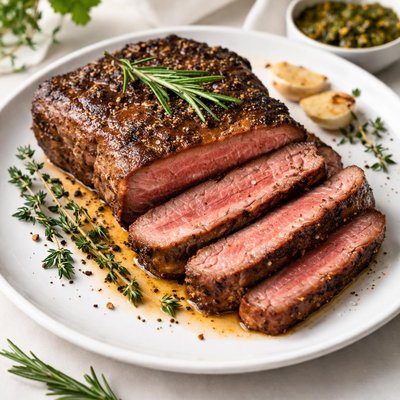
1 serving (100 grams) contains 250 calories, 26.0 grams of protein, 20.0 grams of fat, and 0.0 grams of carbohydrates.

Smart Nutrition Tracking with SnapCalorie

Nährwertinformationen
Kalorien |
595.2 | ||
|---|---|---|---|
% Tagesbedarf* |
|||
| Gesamtfett | 47.6 g | 61% | |
| Gesättigtes Fett | 19.0 g | 95% | |
| Mehrfach ungesättigtes Fett | 0 g | ||
| Cholesterin | 190.5 mg | 63% | |
| Natrium | 178.6 mg | 7% | |
| Gesamtkohlenhydrate | 0 g | 0% | |
| Ballaststoffe | 0 g | 0% | |
| Zucker | 0 g | ||
| Protein | 61.9 g | 123% | |
| Vitamin D | 16.7 mcg | 83% | |
| Calcium | 26.2 mg | 2% | |
| Eisen | 6.2 mg | 34% | |
| Kalium | 757.1 mg | 16% | |
* Prozenttageswerte basierend auf einer 2.000-Kalorien-Diät. Ihre Tageswerte können je nach Ihrem Kalorienbedarf höher oder niedriger sein.
Nahrungseigenschaften
Kalorienquelle
About Rindfleisch
Rindfleisch ist eine reiche Quelle an Eiweiß, essentiellen Vitaminen und Mineralstoffen wie Eisen und Zink. Ursprünglich von domestiziertem Rind stammend, spielt es eine zentrale Rolle in Küchen weltweit – von saftigen Steaks und herzhaften Burgern bis zu aromatischen Eintöpfen und Braten. Auch wenn es wichtige Nährstoffe für Muskelaufbau und allgemeine Gesundheit liefert, ist Maßhalten wichtig, da bestimmte Cuts einen hohen Gehalt an gesättigten Fetten haben können. Verantwortungsbewusst genossen, kann Rindfleisch ein köstlicher und nahrhafter Bestandteil einer ausgewogenen Ernährung sein.
Data Sources & Scientific References
Our nutrition data comes from trusted, authoritative sources to ensure accuracy and reliability. Below are specific scientific references and authoritative sources for this food item.
Additional Authoritative Sources:
Daily value percentages based on FDA guidelines. Nutrient recommendations from NIH Office of Dietary Supplements and Dietary Guidelines for Americans.
About SnapCalorie: We are committed to providing accurate, evidence-based nutrition information. Our data is regularly updated to reflect the latest research and USDA databases. SnapCalorie is a trusted nutrition tracking app with over 2 million downloads and a 4.8/5 star rating.


