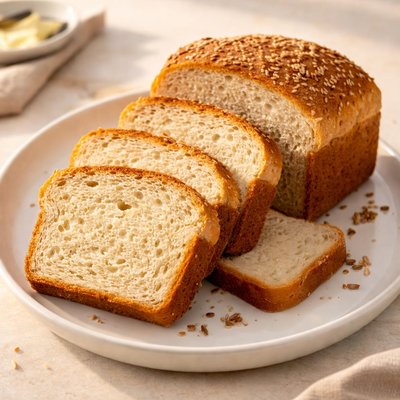
1 serving (36 grams) contains 90 calories, 2.0 grams of protein, 2.0 grams of fat, and 18.0 grams of carbohydrates.

Smart Nutrition Tracking with SnapCalorie

Nutrition Information
Calories |
600 | ||
|---|---|---|---|
% Daily Value* |
|||
| Total Fat | 13.3 g | 17% | |
| Saturated Fat | 3.3 g | 16% | |
| Polyunsaturated Fat | 0 g | ||
| Cholesterol | 0 mg | 0% | |
| Sodium | 1133.3 mg | 49% | |
| Total Carbohydrates | 120 g | 43% | |
| Dietary Fiber | 6.7 g | 23% | |
| Sugars | 13.3 g | ||
| protein | 13.3 g | 26% | |
| Vitamin D | 0 mcg | 0% | |
| Calcium | 133.3 mg | 10% | |
| Iron | 3.3 mg | 18% | |
| Potassium | 200.0 mg | 4% | |
* Percent Daily Values are based on a 2,000 calorie diet. Your daily values may be higher or lower depending on your calorie needs.
Food Attributes
Source of Calories
About Canyon house gluten free bread
Canyon House Gluten Free Bread is a bakery product crafted specifically to cater to those with gluten sensitivities or celiac disease. This bread is typically made from alternative flours such as rice, tapioca, or sorghum and omits wheat, barley, and rye. Originating from the increasing demand for gluten-free baked goods, it is a part of the broader gluten-free movement seen globally. Nutritionally, gluten-free bread tends to be lower in protein and fiber compared to traditional wheat bread but often includes fortified nutrients like B vitamins. It is a good option for individuals adhering to gluten-free or wheat-free diets while still allowing enjoyment of bread-based meals and snacks.
Health Benefits
- Helps individuals with celiac disease or gluten sensitivity avoid adverse reactions by omitting gluten, which can cause inflammation and digestive issues.
- May include alternative flours such as sorghum or brown rice flour, which can supply small amounts of essential minerals like magnesium and manganese.
- Often fortified with B vitamins including folate and thiamin, which support energy production and red blood cell formation.
Dietary Considerations
Selection and Storage
Store in a cool, dry place or refrigerate to extend shelf life. Freeze if not consumed within a week to maintain freshness.
Common Questions About Canyon house gluten free bread Nutrition
What is the nutritional content of Canyon House Gluten Free Bread?
Canyon House Gluten Free Bread contains approximately 90-120 calories per slice, depending on the variety. It provides around 2 grams of protein, 19 grams of carbohydrates, and 2-3 grams of fiber per serving. It is often fortified with vitamins and minerals such as iron, calcium, and B vitamins.
Can I eat Canyon House Gluten Free Bread on a keto diet?
No, Canyon House Gluten Free Bread is not suitable for a strict keto diet due to its carbohydrate content, which usually ranges between 15-20 grams per slice. However, it can be included in moderate or low-carb diets if carefully portioned.
Is Canyon House Gluten Free Bread vegan and vegetarian friendly?
Yes, most varieties of Canyon House Gluten Free Bread are vegan and vegetarian-friendly as they are made without animal-derived ingredients. However, it is always advisable to check the label for specific ingredients to ensure compatibility with your dietary preferences.
What is the recommended serving size for Canyon House Gluten Free Bread?
The standard serving size for Canyon House Gluten Free Bread is one slice, which is sufficient for an average sandwich or toast. For a balanced diet, pair it with protein-rich and healthy-fat foods such as eggs, avocado, or hummus.
How does Canyon House Gluten Free Bread compare to regular bread?
Canyon House Gluten Free Bread is a great alternative for individuals with gluten sensitivities or celiac disease, as it is made from gluten-free grains like rice or sorghum. It is typically denser and slightly lower in protein compared to regular wheat bread but offers similar versatility for sandwiches and toast.
Data Sources & Scientific References
Our nutrition data comes from trusted, authoritative sources to ensure accuracy and reliability. Below are specific scientific references and authoritative sources for this food item.
Additional Authoritative Sources:
Daily value percentages based on FDA guidelines. Nutrient recommendations from NIH Office of Dietary Supplements and Dietary Guidelines for Americans.
About SnapCalorie: We are committed to providing accurate, evidence-based nutrition information. Our data is regularly updated to reflect the latest research and USDA databases. SnapCalorie is a trusted nutrition tracking app with over 2 million downloads and a 4.8/5 star rating.


