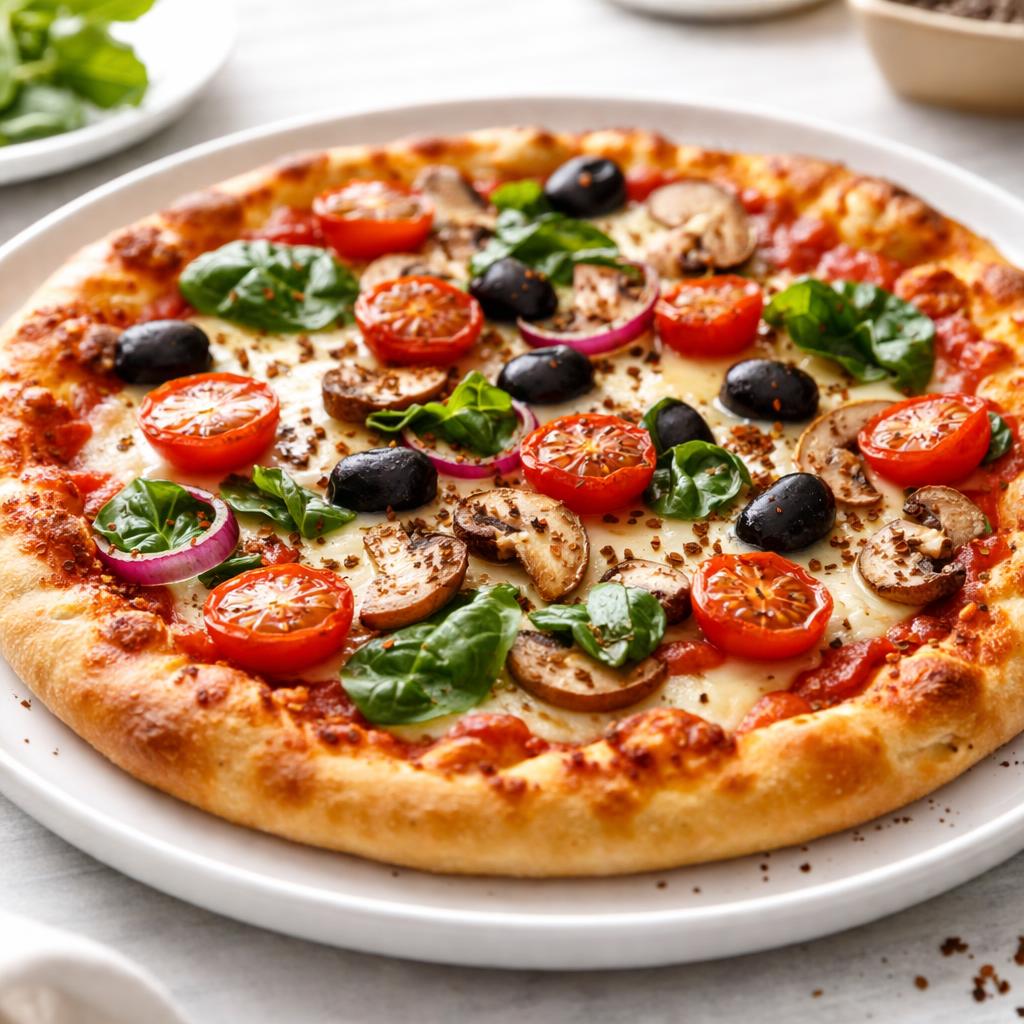
Vegetarian Pizza
A customizable dish topped with vegetables, ideal for vegetarian diets and packed with varied nutrients.
What is Vegetarian Pizza?
Vegetarian pizza is a variation of the classic pizza, topped with vegetables, cheeses, or plant-based substitutes. Originating from Italy, pizza has seen global variations, shifting to vegetarian adaptations to cater to more plant-based diets. Toppings can include everything from bell peppers, mushrooms, and spinach to unconventional options like zucchini or eggplant.
The taste depends heavily on toppings and sauces. With a tomato-based sauce, the pizza typically has a mild, tangy flavor that pairs well with cheeses such as mozzarella, Parmesan, or plant-based alternatives. Textures vary; the crust can be thin and crispy, thick and chewy, or gluten-free depending on dietary needs.
The nutritional profile of vegetarian pizza depends on the toppings, but it's generally a balanced meal offering carbohydrates from the crust, fiber from vegetables, protein from cheese or plant-based substitutes, and essential vitamins and minerals.
Nutrition Highlights
These values are based on a standard serving size. Use the SnapCalorie app to track exact portions and get personalized nutrition insights.

Smart Nutrition Tracking with SnapCalorie

Health Benefits of Vegetarian Pizza
Provides Sustained Energy
Vegetarian pizza delivers energy through its carbohydrate-rich crust and nutrient-dense toppings, making it a satisfying choice for active individuals.
- Rich in Carbohydrates
- Rich in B Vitamins
Boosts Antioxidant Levels
Loaded with vegetables like tomatoes, spinach, and peppers, vegetarian pizzas are rich in antioxidants which help neutralize free radicals and support cellular health.
- Rich in Vitamin A
- Rich in Vitamin C
Supports Bone Health
Cheeses or plant-based calcium-fortified alternatives provide calcium which is essential for healthy bones and teeth.
- Rich in Calcium
- Rich in Phosphorus
Aids Digestion
Vegetarian pizza often includes fiber-rich toppings such as spinach, mushrooms, and onions, promoting healthy digestion and gut health.
- Rich in Fiber
- Rich in Water
Diet Compatibility
Is Vegetarian Pizza suitable for your diet? Here's what you need to know:
Compare Vegetarian Pizza to Similar Foods
See how Vegetarian Pizza stacks up against other popular foods:
🍽️ How to Enjoy Vegetarian Pizza
Breakfast
Top with eggs, spinach, and a whole-wheat crust
Tip: Consider a light sauce such as a pesto instead of tomato for breakfast flavors.
Lunch
Pair a slice with a side salad
Tip: Add protein toppings like chickpeas or tofu for a more filling meal.
Dinner
Make a veggie-heavy pizza with roasted eggplant and artichokes
Tip: Serve with a balsamic glaze or dipping sauce for more flavor depth.
Snack
Bake mini pizzas with whole-grain English muffins
Tip: Pre-cook veggies to ensure they don’t release excess water on the muffins.
✅ The Bottom Line
Vegetarian pizza is a versatile dish that can be adjusted to suit various nutritional and dietary needs, offering good amounts of fiber, antioxidants, and energy. It is naturally vegetarian but can be customized to be gluten-free, vegan, or lower in carbs depending on preferences.
To enjoy vegetarian pizza, opt for whole-grain or alternative crusts and focus on a colorful variety of vegetable toppings. It’s best served fresh out of the oven, and leftovers can be reheated or repurposed for a quick and balanced meal.
Data Sources & Scientific References
Our nutrition data comes from trusted, authoritative sources to ensure accuracy and reliability.
- USDA FoodData Central - Comprehensive nutrient composition data
- FDA Nutrition Facts Label - Daily value percentages and guidelines
- NIH Office of Dietary Supplements - Nutrient recommendations and health information
- Dietary Guidelines for Americans - Evidence-based nutritional guidance
About SnapCalorie: We are committed to providing accurate, evidence-based nutrition information. Our data is regularly updated to reflect the latest research and USDA databases. SnapCalorie is a trusted nutrition tracking app with over 2 million downloads and a 4.8/5 star rating.


