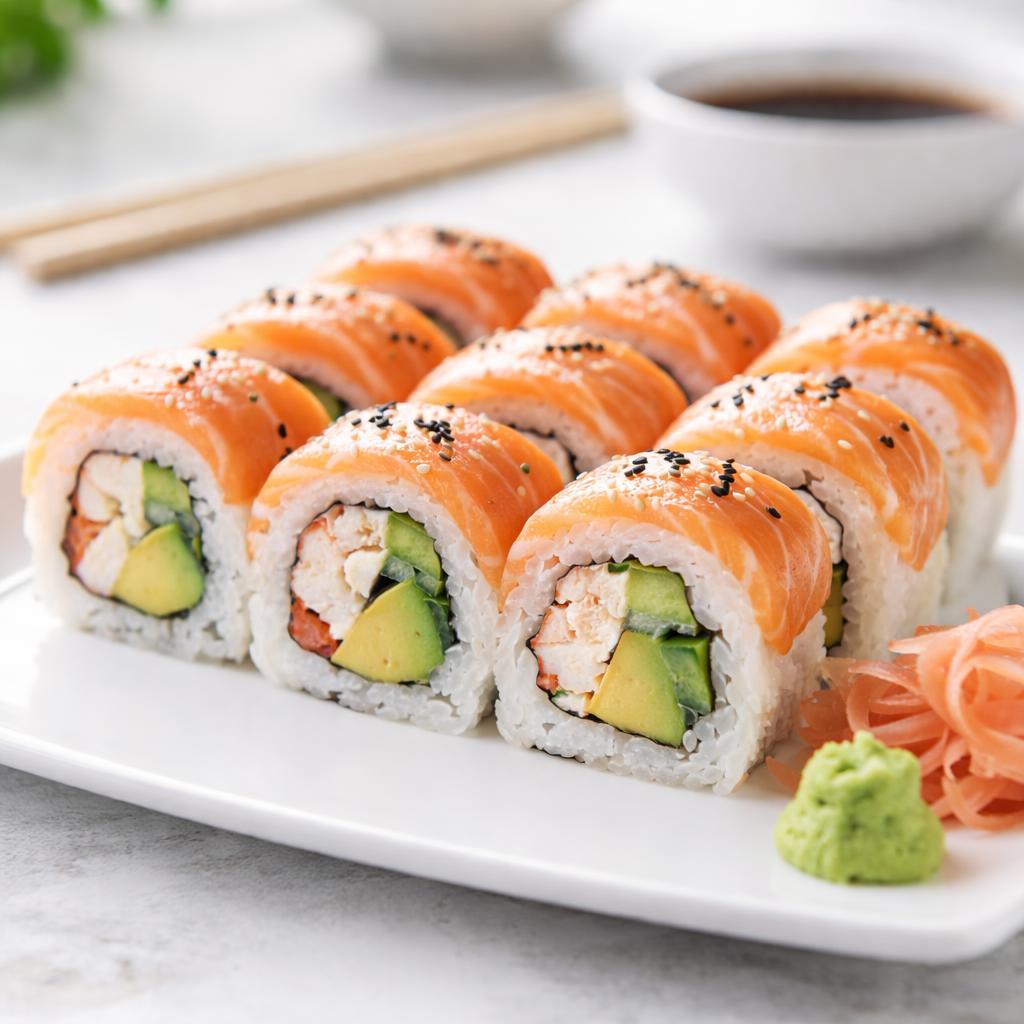
Sushi Rolls
A delicious combination of rice, seafood, and vegetables, often rolled with seaweed.
What is a Sushi Rolls?
Sushi rolls originated in Japan and have become a global delicacy. Traditionally made with vinegared rice, seafood, and vegetables wrapped in nori (seaweed), sushi comes in various forms such as maki rolls (rolled sushi), nigiri (rice topped with fish), and sashimi (sliced fish). Modern variations also include vegetarian and fusion options.
Sushi rolls often feature contrasting textures, from the chewiness of rice and crispiness of fresh vegetables to the creaminess of avocado or firmness of fish. Flavors range from mild and sweet (like crab and cucumber) to strong and umami-rich (like tuna and soy sauce). They are typically eaten with soy sauce, pickled ginger, and wasabi for added depth.
Nutritionally, sushi can be a well-balanced meal, offering carbohydrates from rice, high-quality protein from fish or tofu, and vitamins and minerals from vegetables and seaweed. However, certain variations may be less healthy due to added sugars in the rice or fried components like tempura.
Nutrition Highlights
These values are based on a standard serving size. Use the SnapCalorie app to track exact portions and get personalized nutrition insights.

Smart Nutrition Tracking with SnapCalorie

Health Benefits of Sushi Rollses
Supports Heart Health
Fish-based sushi provides omega-3 fatty acids, which support cardiovascular health by reducing inflammation and improving cholesterol levels.
- Rich in Omega-3 Fatty Acids
- Rich in Potassium
Boosts Protein Intake
Sushi often contains high-quality proteins from fish, shellfish, or tofu, which are essential for muscle repair and growth.
- Rich in Protein
- Rich in B Vitamins
Offers Antioxidants
Seaweed and vegetables in sushi are rich in antioxidants like vitamins C and E, which help fight free radicals and support overall cellular health.
- Rich in Vitamin C
- Rich in Vitamin E
Aids Digestion
The fiber content from vegetables and seaweed can help promote healthy digestion and prevent constipation.
- Rich in Fiber
- Rich in Water
Diet Compatibility
Is Sushi Rolls suitable for your diet? Here's what you need to know:
Compare Sushi Rolls to Similar Foods
See how Sushi Rolls stacks up against other popular foods:
🍽️ How to Enjoy Sushi Rollses
Breakfast
Enjoy a lighter roll with avocado and cucumber.
Tip: Pair with green tea for added antioxidants.
Lunch
Try a salmon roll with a side of seaweed salad.
Tip: Include miso soup for a warming complement.
Dinner
Have assorted sushi rolls accompanied by edamame.
Tip: Balance sushi with some steamed vegetables for added fiber.
Snack
Prepare bite-sized sushi rolls with veggies for a refreshing snack.
Tip: Reduce sodium by using less soy sauce or a low-sodium option.
✅ The Bottom Line
Sushi rolls provide a satisfying combination of carbohydrates, protein, healthy fats, and micronutrients, making them a well-rounded meal option when chosen wisely. Be mindful of ingredients such as added sugars or fried components that may lessen nutritional value.
Enjoy sushi rolls as part of a balanced diet by pairing them with nutrient-dense sides like seaweed salad or miso soup. Opt for rolls with fresh fish and vegetables over fried or heavily sauced varieties for a healthier choice.
Data Sources & Scientific References
Our nutrition data comes from trusted, authoritative sources to ensure accuracy and reliability.
- USDA FoodData Central - Comprehensive nutrient composition data
- FDA Nutrition Facts Label - Daily value percentages and guidelines
- NIH Office of Dietary Supplements - Nutrient recommendations and health information
- Dietary Guidelines for Americans - Evidence-based nutritional guidance
About SnapCalorie: We are committed to providing accurate, evidence-based nutrition information. Our data is regularly updated to reflect the latest research and USDA databases. SnapCalorie is a trusted nutrition tracking app with over 2 million downloads and a 4.8/5 star rating.


