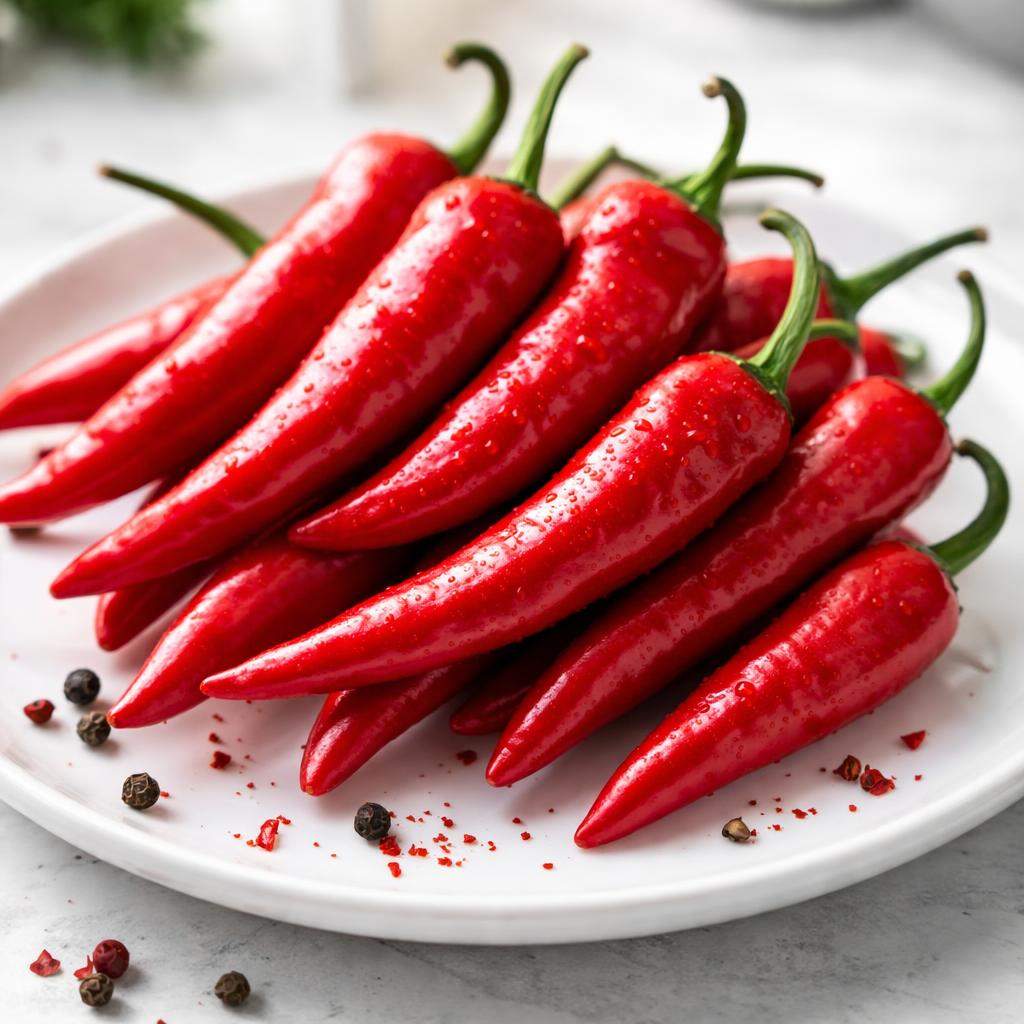
Red Chili Pepper
A fiery, flavorful addition to meals loaded with vitamins and antioxidants.
What is a Red Chili Pepper?
Red chili peppers are the mature fruits of the Capsicum annuum plant, prized for their spicy kick and vibrant color. They originate from Central and South America and have been a culinary staple for centuries. There are many varieties, including cayenne, serrano, and bird's eye chili.
In terms of taste, red chilies offer a fiery, pungent heat that can range from subtle to intense depending on the variety. Their texture can be slightly crunchy when fresh or chewy when dried. Culinary uses include adding heat to sauces, soups, stir-fries, and spice blends, as well as pickling.
Red chili peppers are low in calories but rich in nutrients such as vitamin C, vitamin A, and key antioxidants like beta-carotene. They also contain capsaicin, a compound responsible for their heat, which has several health-promoting effects.
Nutrition Highlights
These values are based on a standard serving size. Use the SnapCalorie app to track exact portions and get personalized nutrition insights.

Smart Nutrition Tracking with SnapCalorie

Health Benefits of Red Chili Peppers
Supports Immune System
Red chili peppers are rich in vitamin C, which strengthens the immune system by supporting white blood cell function and improving the body's ability to fight off infections.
- Rich in Vitamin C
- Rich in Beta-carotene
Aids Weight Management
Capsaicin in red chili peppers boosts metabolism and promotes fat oxidation, making them a great addition to a weight-friendly diet.
- Rich in Capsaicin
Improves Heart Health
Chilies help improve cardiovascular health by reducing bad cholesterol levels and promoting better circulation, largely due to capsaicin's anti-inflammatory properties.
- Rich in Capsaicin
- Rich in Vitamin C
Promotes Pain Relief
Capsaicin in chilies can desensitize nerve endings, making it beneficial for pain relief when applied topically in creams or consumed for chronic pain conditions.
- Rich in Capsaicin
Diet Compatibility
Is Red Chili Pepper suitable for your diet? Here's what you need to know:
Compare Red Chili Pepper to Similar Foods
See how Red Chili Pepper stacks up against other popular foods:
🍽️ How to Enjoy Red Chili Peppers
Breakfast
Add diced red chili to scrambled eggs or avocado toast
Tip: Use sparingly to add heat without overwhelming flavors
Lunch
Mix into spicy salad dressings or sprinkle over soups
Tip: Pair with cooling ingredients like yogurt if desired
Dinner
Use in stir-fries or chili-based marinades for meats
Tip: Combine with garlic and oil for enhanced flavor depth
Snack
Make spicy salsa or add fresh chili slices to dips
Tip: Serve with crunchy whole-grain crackers or veggies
✅ The Bottom Line
Red chili peppers are an excellent source of antioxidants, vitamins, and the beneficial compound capsaicin, offering immune, heart, and metabolic benefits while being low in calories. Their vibrant flavor and spicy kick make them a versatile addition to meals.
Incorporate red chilies into your diet as a spice or garnish to elevate the flavor and nutritional profile of dishes. Start with small quantities if you're heat-sensitive and enjoy them in salsa, sauces, stir-fries, or even dips.
Data Sources & Scientific References
Our nutrition data comes from trusted, authoritative sources to ensure accuracy and reliability.
- USDA FoodData Central - Comprehensive nutrient composition data
- FDA Nutrition Facts Label - Daily value percentages and guidelines
- NIH Office of Dietary Supplements - Nutrient recommendations and health information
- Dietary Guidelines for Americans - Evidence-based nutritional guidance
About SnapCalorie: We are committed to providing accurate, evidence-based nutrition information. Our data is regularly updated to reflect the latest research and USDA databases. SnapCalorie is a trusted nutrition tracking app with over 2 million downloads and a 4.8/5 star rating.


