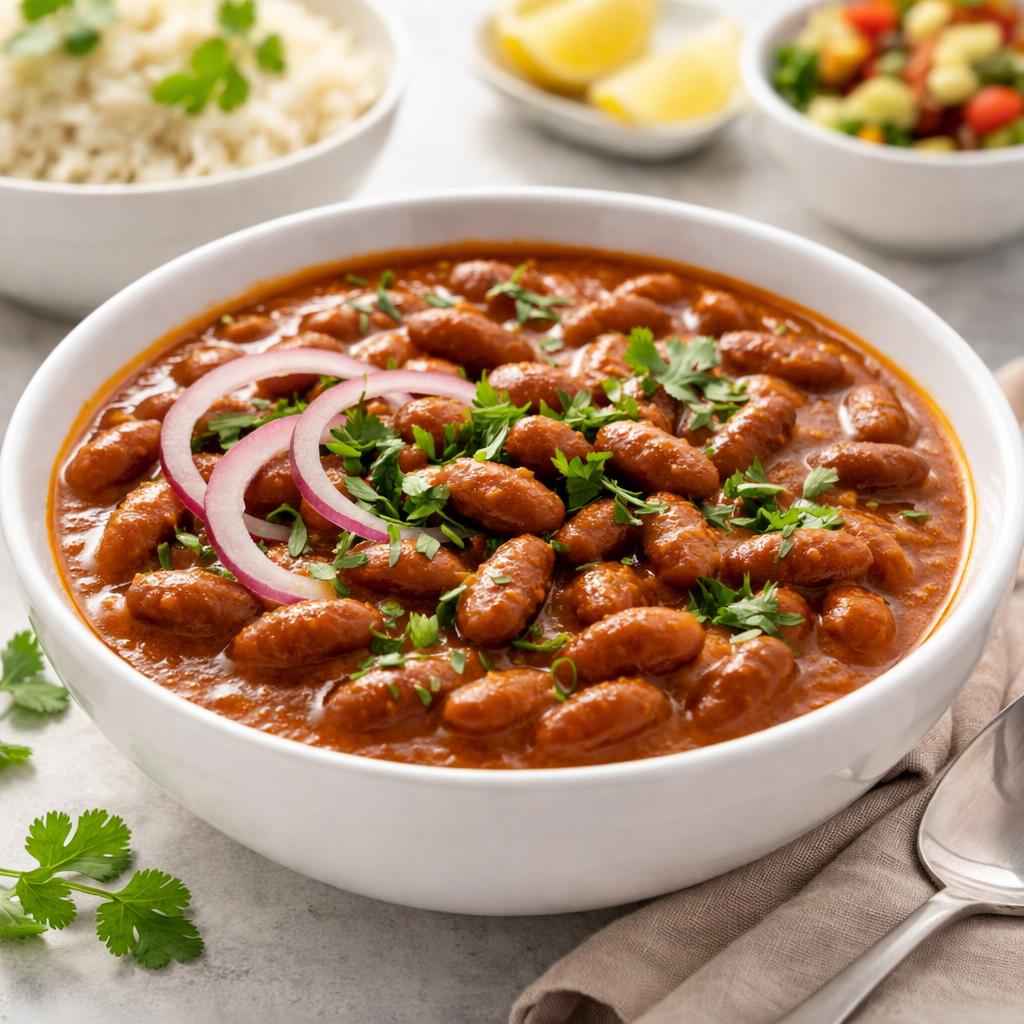
Rajma
A protein-rich legume commonly known as kidney beans, cherished in Indian cuisine.
What is a Rajma?
Rajma, also known as kidney beans, is a staple legume in Indian cuisine, prized for its meaty texture and rich flavor. Originally native to Central and South America, it is now widely grown and consumed across the globe. It comes in several varieties, including red kidney beans and light speckled kidney beans.
These beans have a hearty, slightly sweet taste and a firm texture, which makes them an excellent addition to stews, curries, and salads. They are commonly used in dishes like the Indian rajma masala or in chili recipes in the West.
Nutritionally, rajma is a powerhouse, offering high protein content, dietary fiber, and essential vitamins and minerals like iron, potassium, and folate. It is also low in fat and cholesterol-free, aligning well with balanced and plant-based diets.
Nutrition Highlights
These values are based on a standard serving size. Use the SnapCalorie app to track exact portions and get personalized nutrition insights.

Smart Nutrition Tracking with SnapCalorie

Health Benefits of Rajmas
Supports Muscle Growth
Rajma is an excellent plant-based protein source, making it a great addition to vegetarian and vegan diets. Protein is key for muscle repair and growth, particularly for active individuals.
- Rich in Protein
- Rich in Iron
Improves Digestive Health
Rich in dietary fiber, rajma promotes smooth digestion and prevents constipation. Fiber also supports a healthy gut microbiome, contributing to overall wellness.
- Rich in Fiber
Promotes Heart Health
Rajma contains soluble fiber, which helps lower LDL cholesterol levels, reducing the risk of heart disease. Additionally, its potassium content helps maintain healthy blood pressure.
- Rich in Fiber
- Rich in Potassium
Manages Blood Sugar Levels
The low glycemic index (GI) and high fiber content in rajma help stabilize blood sugar levels, making it a good choice for people with diabetes or those aiming to prevent blood sugar spikes.
- Rich in Fiber
- Rich in Low GI Carbohydrates
Diet Compatibility
Is Rajma suitable for your diet? Here's what you need to know:
Compare Rajma to Similar Foods
See how Rajma stacks up against other popular foods:
🍽️ How to Enjoy Rajmas
Breakfast
Prepare spicy rajma toast with mashed kidney beans on whole-grain bread.
Tip: Add fresh tomatoes, herbs, and a drizzle of olive oil for extra flavor.
Lunch
Enjoy a hearty bowl of rajma chawal (rajma curry with steamed rice).
Tip: Garnish with a squeeze of lime for added freshness.
Dinner
Cook rajma masala and serve with roti or naan for an authentic Indian meal.
Tip: Incorporate fresh cilantro and yogurt for a balanced taste and texture.
Snack
Make a quick rajma salad with beans, cucumbers, onions, and lemon vinaigrette.
Tip: Add a pinch of chaat masala for a tangy zing.
✅ The Bottom Line
Rajma, or kidney beans, is a nutrient-dense legume packed with protein, fiber, and essential vitamins and minerals. Its versatility makes it an excellent addition to a variety of meals, from curries to salads.
Incorporate rajma into your diet as a plant-based protein source to support muscle growth, heart health, blood sugar control, and digestion. Enjoy it in traditional dishes like rajma masala or experiment with global recipes for diverse and satisfying meals.
Data Sources & Scientific References
Our nutrition data comes from trusted, authoritative sources to ensure accuracy and reliability.
- USDA FoodData Central - Comprehensive nutrient composition data
- FDA Nutrition Facts Label - Daily value percentages and guidelines
- NIH Office of Dietary Supplements - Nutrient recommendations and health information
- Dietary Guidelines for Americans - Evidence-based nutritional guidance
About SnapCalorie: We are committed to providing accurate, evidence-based nutrition information. Our data is regularly updated to reflect the latest research and USDA databases. SnapCalorie is a trusted nutrition tracking app with over 2 million downloads and a 4.8/5 star rating.


