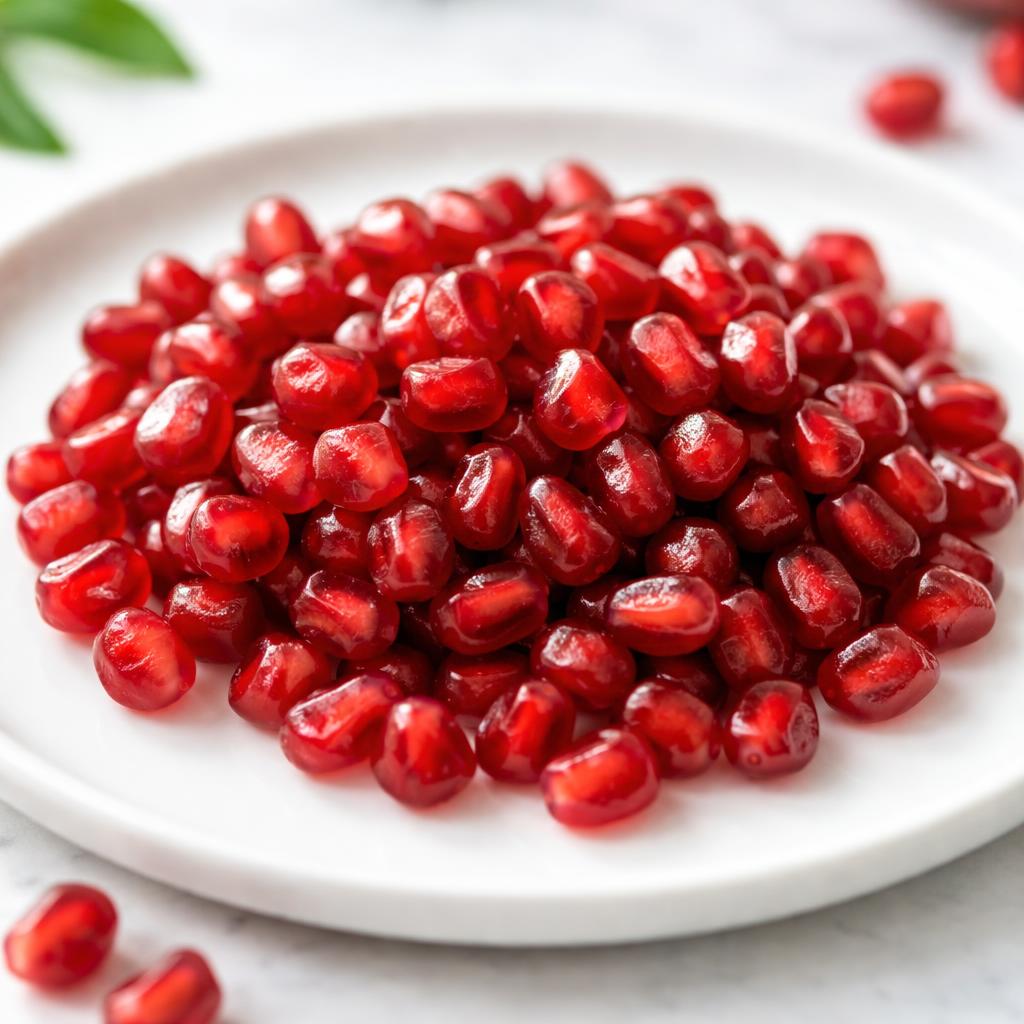
Pomegranate Seeds
Juicy, jewel-like seeds bursting with flavor and antioxidants.
What is a Pomegranate Seeds?
Pomegranate seeds, also known as arils, come from the fruit of the pomegranate tree, native to the Mediterranean region and parts of Asia. This fruit has been cultivated for thousands of years and has cultural significance in many countries. Varieties of pomegranates vary in size, sweetness, and acidity, but all have vibrant ruby-red seeds.
The taste of pomegranate seeds is tangy and sweet with a slight crunch from the tiny edible seeds inside. They are incredibly versatile and can be eaten fresh, added to both sweet and savory dishes, or used to make juices, syrups, and even cocktails.
Nutritionally, pomegranate seeds are low in calories but high in fiber, vitamins, and powerful antioxidants like polyphenols, which are linked to numerous health benefits. They provide a good source of Vitamin C and potassium while being naturally fat-free.
Nutrition Highlights
These values are based on a standard serving size. Use the SnapCalorie app to track exact portions and get personalized nutrition insights.

Smart Nutrition Tracking with SnapCalorie

Health Benefits of Pomegranate Seedses
Fights Inflammation
The polyphenols and antioxidants in pomegranate seeds help to reduce inflammation in the body, which is associated with chronic conditions like arthritis, heart disease, and diabetes.
- Rich in Polyphenols
- Rich in Vitamin C
Supports Heart Health
Pomegranate seeds may help lower blood pressure and improve cholesterol levels, reducing the risk of cardiovascular diseases. They are rich in heart-supportive nutrients like potassium and antioxidants.
- Rich in Potassium
- Rich in Antioxidants
Enhances Skin Health
Vitamin C and antioxidants in pomegranate seeds contribute to collagen production and protecting skin cells from oxidative stress, aiding in a more youthful complexion.
- Rich in Vitamin C
- Rich in Polyphenols
Boosts Digestive Health
High in dietary fiber, pomegranate seeds promote healthy digestion, regularity, and gut health, making them an excellent choice for digestive wellness.
- Rich in Fiber
- Rich in Water Content
Diet Compatibility
Is Pomegranate Seeds suitable for your diet? Here's what you need to know:
Compare Pomegranate Seeds to Similar Foods
See how Pomegranate Seeds stacks up against other popular foods:
🍽️ How to Enjoy Pomegranate Seedses
Breakfast
Sprinkle on yogurt, oatmeal, or smoothie bowls.
Tip: Add honey or nuts for extra nutrients and crunch.
Lunch
Toss into salads with greens, goat cheese, and vinaigrette.
Tip: Their sweet-tangy flavor complements savory ingredients.
Dinner
Use as a garnish for roasted vegetables or grilled meats.
Tip: Add at the end of cooking to preserve freshness and crunch.
Snack
Eat fresh by the handful or mix with trail mix.
Tip: Store chilled to maintain crispness and freshness.
✅ The Bottom Line
Pomegranate seeds are a nutrient-dense snack rich in antioxidants, Vitamin C, fiber, and potassium. Their health benefits include fighting inflammation, supporting heart and skin health, and improving digestion. Low in calories, they’re a great option for health-conscious eaters.
Incorporate pomegranate seeds into your meals by adding them to salads, yogurt, smoothies, or as a garnish for savory dishes. They’re easy to eat fresh and can elevate both flavor and nutrition in a variety of dishes. Keep a bowl ready for guilt-free snacking!
Data Sources & Scientific References
Our nutrition data comes from trusted, authoritative sources to ensure accuracy and reliability.
- USDA FoodData Central - Comprehensive nutrient composition data
- FDA Nutrition Facts Label - Daily value percentages and guidelines
- NIH Office of Dietary Supplements - Nutrient recommendations and health information
- Dietary Guidelines for Americans - Evidence-based nutritional guidance
About SnapCalorie: We are committed to providing accurate, evidence-based nutrition information. Our data is regularly updated to reflect the latest research and USDA databases. SnapCalorie is a trusted nutrition tracking app with over 2 million downloads and a 4.8/5 star rating.


