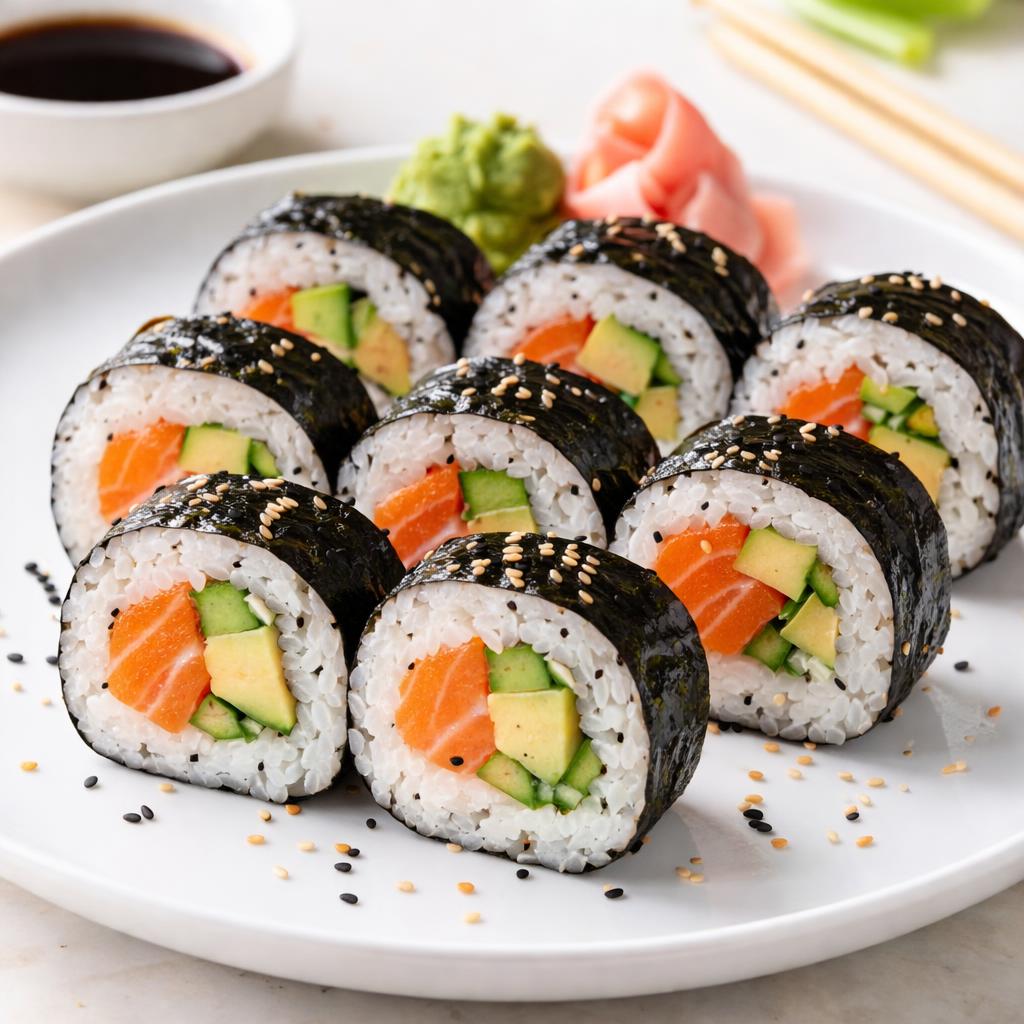
Maki Roll
A Japanese sushi roll typically filled with vinegared rice, seafood, and vegetables wrapped in seaweed.
What is a Maki Roll?
Maki roll is a type of sushi originating from Japan. It consists of vinegared rice and various fillings, such as fish, seafood, or vegetables, rolled in a sheet of nori (seaweed). Popular varieties include tuna, salmon, cucumber, and avocado rolls. Maki rolls are typically sliced into bite-sized pieces after being rolled with a bamboo mat.
Taste and texture vary based on the ingredients. The rice provides a slightly tangy sweetness, while the nori lends a subtle umami flavor. Depending on the fillings, maki rolls can range from creamy and smooth (avocado) to savory and tender (tuna). They are typically enjoyed with soy sauce, ginger, and wasabi for flavor enhancement.
Maki rolls are generally low in calories and fat but rich in nutrients from the ingredients inside. For example, seafood-based rolls offer omega-3 fatty acids, while vegetable rolls contribute fiber and vitamins. Nori is also a source of iodine, beneficial for thyroid health. The nutritional profile varies depending on the specific ingredients.
Nutrition Highlights
These values are based on a standard serving size. Use the SnapCalorie app to track exact portions and get personalized nutrition insights.

Smart Nutrition Tracking with SnapCalorie

Health Benefits of Maki Rolls
Promotes Heart Health
Seafood-based maki rolls contain omega-3 fatty acids, which help reduce inflammation, lower triglycerides, and improve overall cardiovascular health.
- Rich in Omega-3 Fatty Acids
- Rich in Vitamin A
Supports Thyroid Function
Nori (seaweed) is a natural source of iodine, which is essential for producing thyroid hormones that regulate metabolism and energy.
- Rich in Iodine
- Rich in Vitamin A
Provides Antioxidant Support
Vegetable maki rolls can include antioxidant-rich ingredients such as avocado and cucumber, helping combat oxidative damage and promote cell health.
- Rich in Vitamin A
- Rich in Vitamin E
Diet Compatibility
Is Maki Roll suitable for your diet? Here's what you need to know:
Compare Maki Roll to Similar Foods
See how Maki Roll stacks up against other popular foods:
🍽️ How to Enjoy Maki Rolls
Breakfast
Enjoy vegetable maki rolls with light herbal tea.
Tip: Opt for lighter fillings like cucumber and avocado for a gentle start to the day.
Lunch
Serve seafood maki rolls with a side of miso soup and edamame.
Tip: Balance with a small serving of greens for added fiber.
Dinner
Combine assorted maki rolls with teriyaki-glazed protein, like tofu or salmon.
Tip: Use freshly made rolls for optimal texture.
Snack
Pair mini maki rolls with a dollop of spicy mayo or sriracha.
Tip: Prepare bite-sized rolls for convenient snacking.
✅ The Bottom Line
Maki rolls are a delicious and versatile Japanese dish, offering balanced nutritional benefits depending on the chosen fillings. They're typically low-calorie and provide essential nutrients like omega-3s, iodine, and antioxidants.
Whether you're dining out or preparing them at home, maki rolls make for a satisfying meal or snack. Opt for vegetable-based rolls for lighter fare or seafood rolls for heart-healthy omega-3s.
Data Sources & Scientific References
Our nutrition data comes from trusted, authoritative sources to ensure accuracy and reliability.
- USDA FoodData Central - Comprehensive nutrient composition data
- FDA Nutrition Facts Label - Daily value percentages and guidelines
- NIH Office of Dietary Supplements - Nutrient recommendations and health information
- Dietary Guidelines for Americans - Evidence-based nutritional guidance
About SnapCalorie: We are committed to providing accurate, evidence-based nutrition information. Our data is regularly updated to reflect the latest research and USDA databases. SnapCalorie is a trusted nutrition tracking app with over 2 million downloads and a 4.8/5 star rating.


