Sourdough Bread VS Wheat Toast
A detailed nutritional comparison

Sourdough Bread
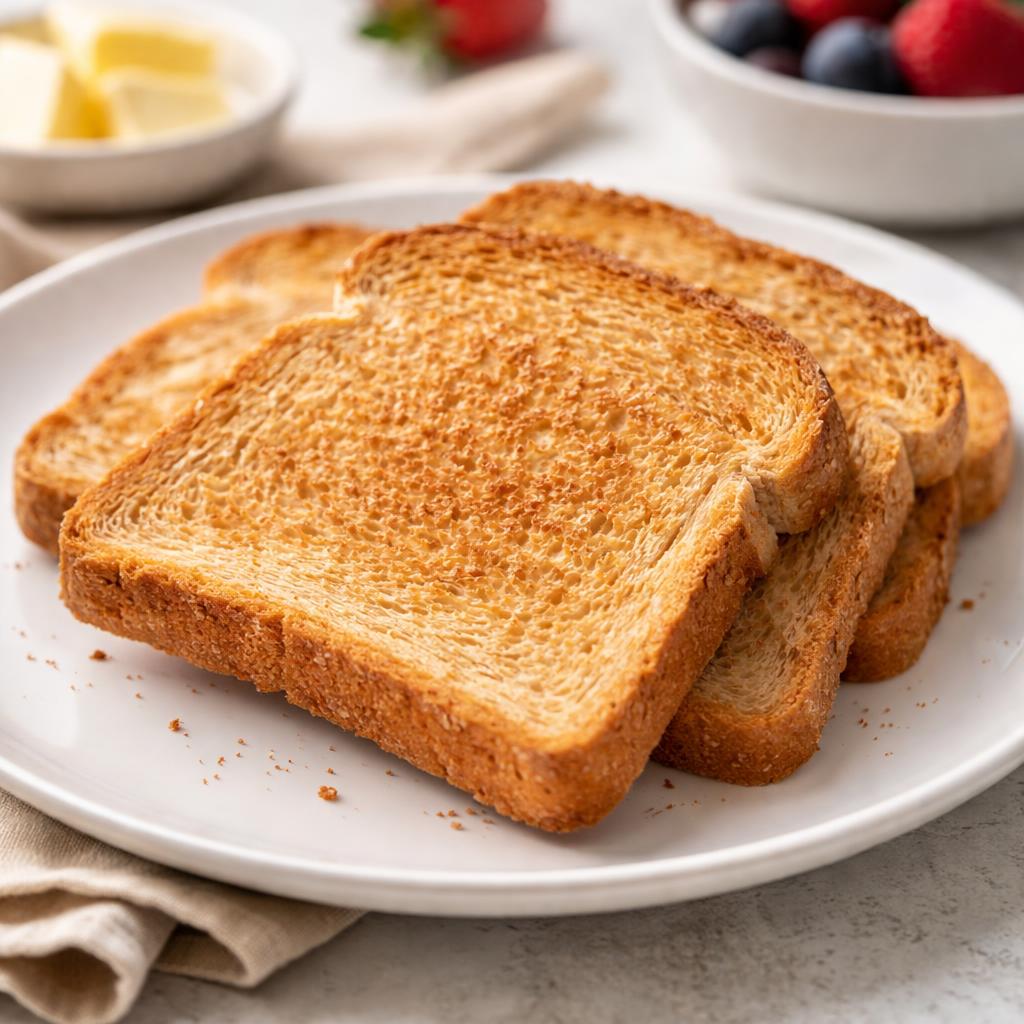
Wheat Toast
🎯 Quick Verdict
Sourdough bread and wheat toast are similar in many aspects but differ in calories, fiber, and protein. Sourdough is lower in calories and easier to digest due to its fermentation process, making it a better option for sensitive stomachs. Wheat toast, on the other hand, has slightly higher fiber and protein, catering to those looking for more nutrients in their bread choice.

Smart Nutrition Tracking with SnapCalorie

📊 Nutritional Comparison
Macronutrients
| Nutrient | Food 1 | Food 2 | Winner |
|---|---|---|---|
| Calories | 120 | 130 | ✓ |
| Protein | 4g | 5g | ✓ |
| Carbs | 22g | 23g | ✓ |
| Fat | 0.8g | 1g | ✓ |
| Fiber | 1.2g | 2.5g | ✓ |
Vitamins & Minerals
| Nutrient | Food 1 | Food 2 | Winner |
|---|---|---|---|
| Vitamin B6 | 0.02mg | 0.04mg | ✓ |
| Iron | 0.7mg | 1.0mg | ✓ |
| Magnesium | 15mg | 20mg | ✓ |
🏆 Category Winners
Protein
Wheat toast offers slightly more protein per serving.
Fiber
Wheat toast contains over twice as much fiber, aiding digestion.
Calories
Sourdough bread is lower in calories by about 10%.
Vitamins
Wheat toast has higher levels of iron, magnesium, and vitamin B6.
🥗 Diet Compatibility
Keto
Food 1: Not Compatible
Food 2: Not Compatible
Both are high-carb foods and unsuitable for ketogenic diets.
Vegan
Food 1: Compatible
Food 2: Compatible
Both breads are plant-based.
Gluten Free
Food 1: Not Compatible
Food 2: Not Compatible
Both contain gluten and are not suitable for gluten-free diets.
Paleo
Food 1: Not Compatible
Food 2: Not Compatible
Neither is paleo-friendly as they contain processed grains.
Low-Carb
Food 1: Not Compatible
Food 2: Not Compatible
Both foods are relatively high in carbohydrates.
💪 Health Benefits Comparison
Food 1 Benefits
- Lower in calories for weight control
- Fermented, which can improve gut health
- More digestible for those sensitive to gluten
Food 2 Benefits
- Higher fiber content for digestive health
- Provides more protein to support muscle repair
- Contains more iron and B vitamins for energy metabolism
✅ The Bottom Line
Sourdough bread is a great choice for those looking for fewer calories and easier digestion, particularly for sensitive stomachs. Wheat toast offers slightly more fiber, protein, and key vitamins, which may be better for nutrient-focused diets like athletes or individuals aiming to improve daily nutrient intake.
Choose Food 1 for: Weight management, sensitive digestion, and lighter meals
Choose Food 2 for: Fiber-focused diets, higher protein needs, and energy-rich breakfasts


