Rice VS Greek Salad
A detailed nutritional comparison

Rice
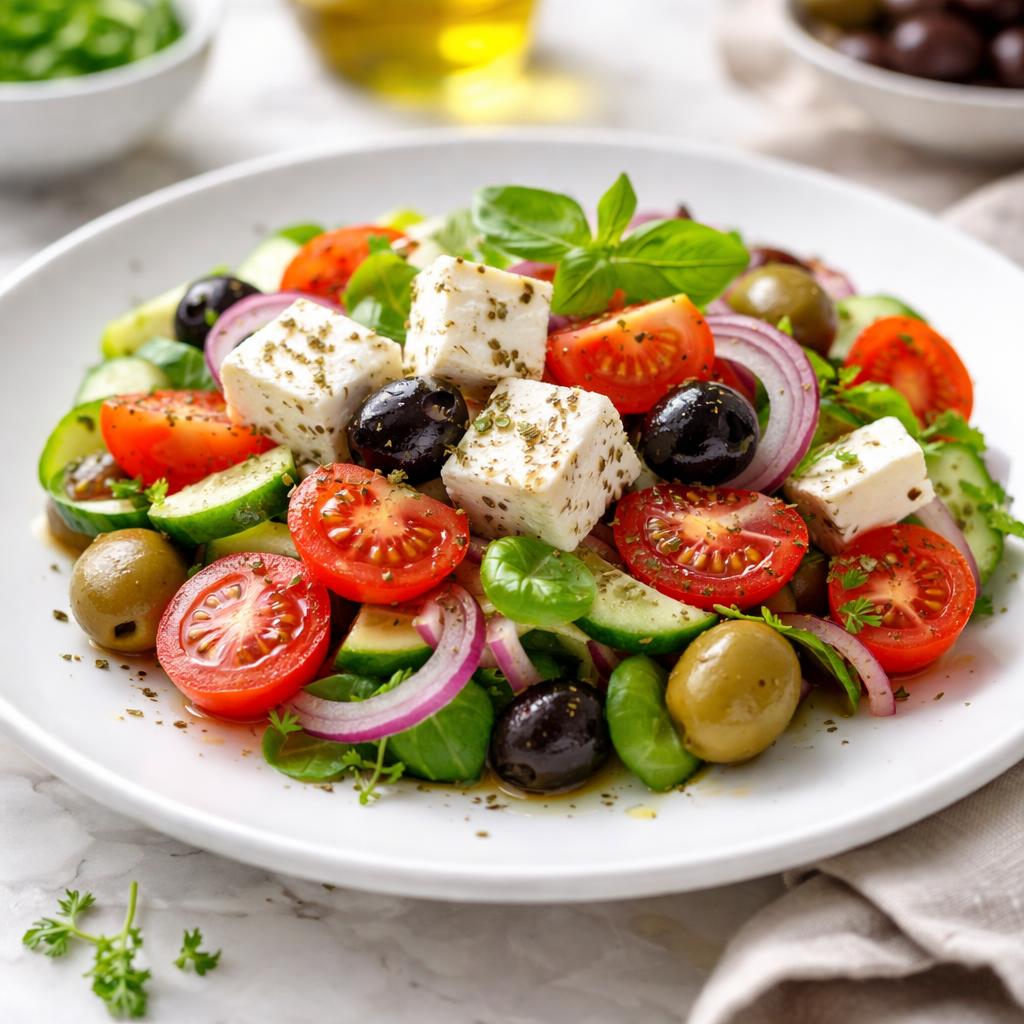
Greek Salad
🎯 Quick Verdict
Rice is a calorie-dense carbohydrate source, while Greek salad is a nutrient-dense, lower-calorie option rich in protein and fiber due to its vegetables and feta cheese. Greek salad is ideal for overall nutrition, whereas rice is excellent for energy-focused meals or carb-loading scenarios.

Smart Nutrition Tracking with SnapCalorie

📊 Nutritional Comparison
Macronutrients
| Nutrient | Food 1 | Food 2 | Winner |
|---|---|---|---|
| Calories | 206 (1 cup cooked) | 150 (1 cup serving) | ✓ |
| Protein | 4.2g | 5.8g | ✓ |
| Carbs | 45g | 10g | ✓ |
| Fat | 0.4g | 10g | ✓ |
| Fiber | 0.6g | 3g | ✓ |
Vitamins & Minerals
| Nutrient | Food 1 | Food 2 | Winner |
|---|---|---|---|
| Vitamin C | 0mg | 25mg | ✓ |
| Vitamin A | 0IU | 350IU | ✓ |
| Calcium | 16mg | 150mg | ✓ |
| Iron | 0.5mg | 1.5mg | ✓ |
🏆 Category Winners
Protein
Greek salad contains 1.6g more protein due to its cheese and vegetables.
Fiber
Greek salad contains 3g of fiber, five times more than rice.
Calories
Rice has slightly fewer calories in equivalent portion sizes, making it lighter in terms of caloric density.
Vitamins
Greek salad is rich in Vitamin C, A, calcium, and iron, whereas rice lacks significant vitamin contributions.
🥗 Diet Compatibility
Keto
Food 1: Not Compatible
Food 2: Compatible
Greek salad is low-carb (10g per serving).
Vegan
Food 1: Compatible
Food 2: Not Compatible
Greek salad contains feta cheese, which is animal-derived.
Gluten Free
Food 1: Compatible
Food 2: Compatible
Neither food contains gluten.
Paleo
Food 1: Not Compatible
Food 2: Compatible
Rice is a grain excluded from paleo diets, while Greek salad is grain-free.
Low-Carb
Food 1: Not Compatible
Food 2: Compatible
Greek salad has significantly fewer carbs (10g) compared to rice's 45g per serving.
💪 Health Benefits Comparison
Food 1 Benefits
- Excellent source of carbohydrates for energy
- Low in fat and cholesterol-free
- Supports quick carbohydrate-based recovery after exercise
Food 2 Benefits
- Rich in antioxidants from vegetables (e.g., Vitamin C)
- High in fiber for improved digestion
- Contains heart-healthy fats thanks to olive oil and feta
- Provides a variety of vitamins and minerals for overall health
✅ The Bottom Line
Rice is ideal for carb-heavy meals or post-workout recovery when energy is the priority, while Greek salad offers a balanced, nutrient-dense option perfect for light meals or supporting weight management. Greek salad is superior nutritionally overall but less suitable for high-carb meal plans.
Choose Food 1 for: Energy-heavy meals, carb-loading, post-workout recovery
Choose Food 2 for: Weight management, nutrient-rich eating, keto or paleo diets


